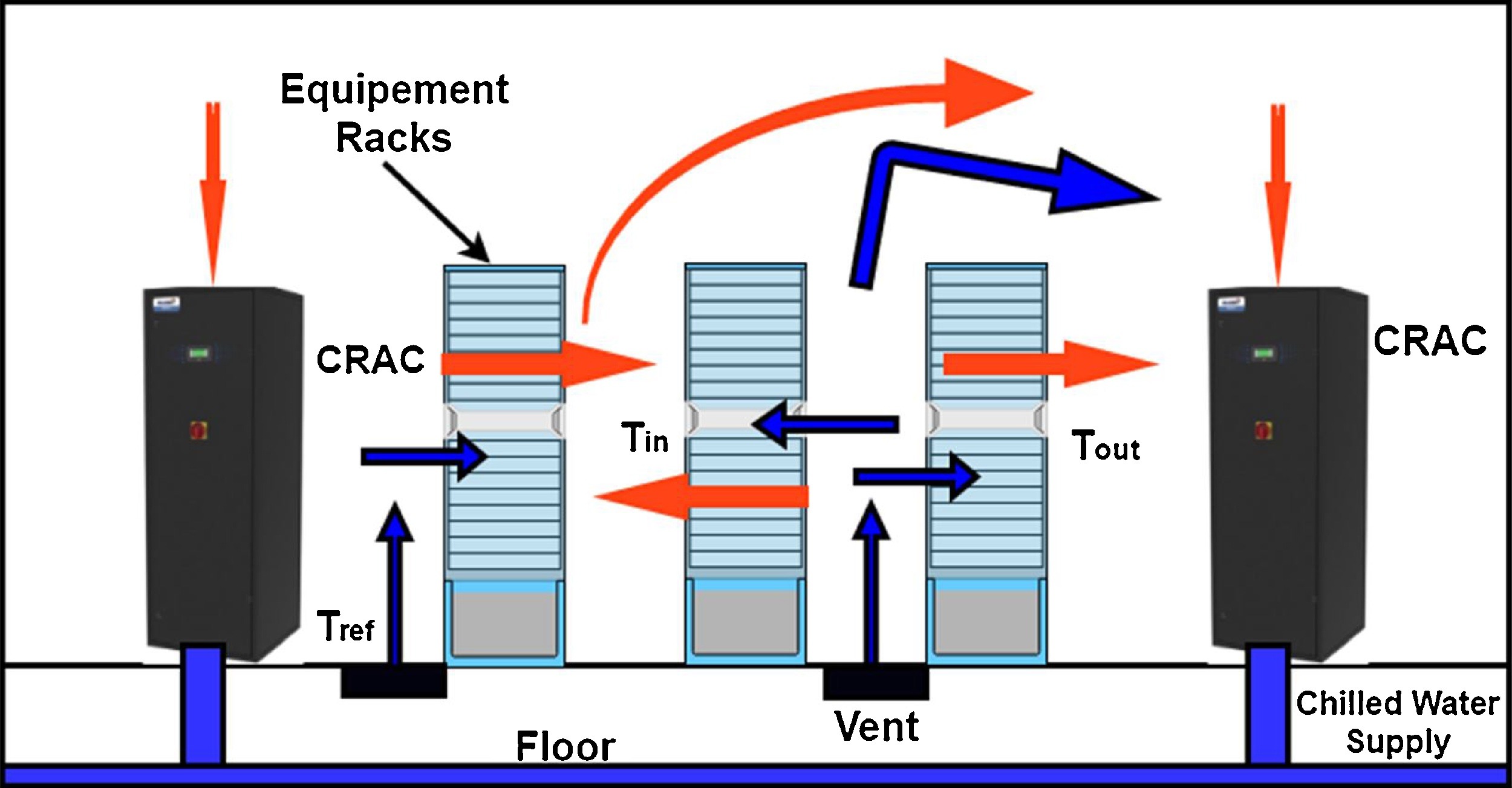
Modern data centres consume substantial energy, with cooling systems representing a major operational cost. This project developed a computational modelling and simulation framework for analysing thermal distribution and airflow dynamics within data centre environments to support energy-efficient infrastructure design and management.
The work integrates thermal modelling, airflow analysis, and predictive algorithms to evaluate cooling strategies and optimise equipment placement.
Typical data centre cooling configuration showing CRAC units, equipment racks, airflow pathways, and thermal zones.
The study analysed the interaction between computer room air conditioning (CRAC) systems, server racks, and airflow circulation patterns. Mathematical models were developed to represent heat generation, transfer mechanisms, and environmental interactions within the facility.
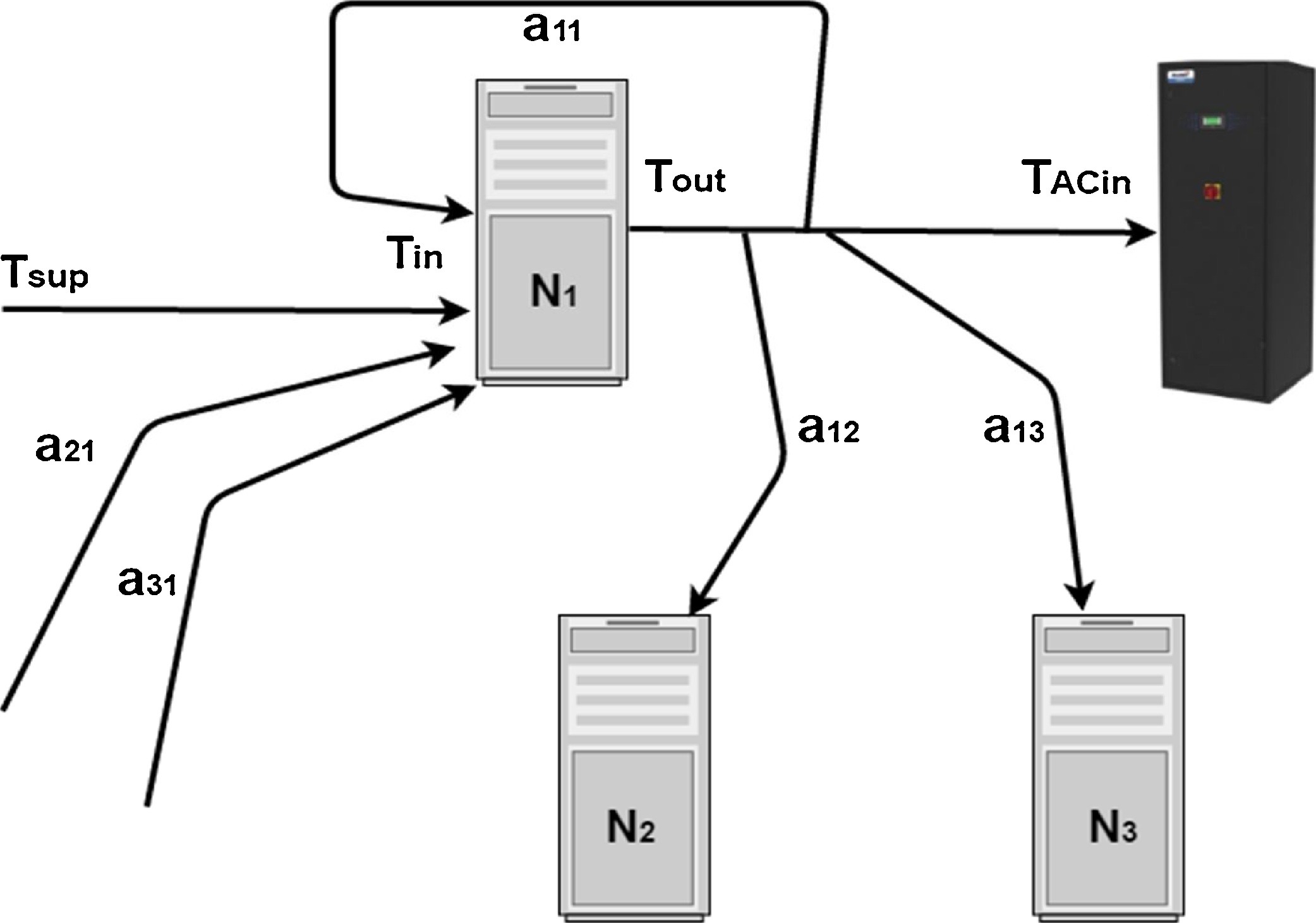
A thermal network approach was proposed to model temperature propagation between computing nodes and cooling systems. The framework enables prediction of inlet and outlet temperatures under varying workloads and environmental conditions, supporting intelligent thermal management decisions.
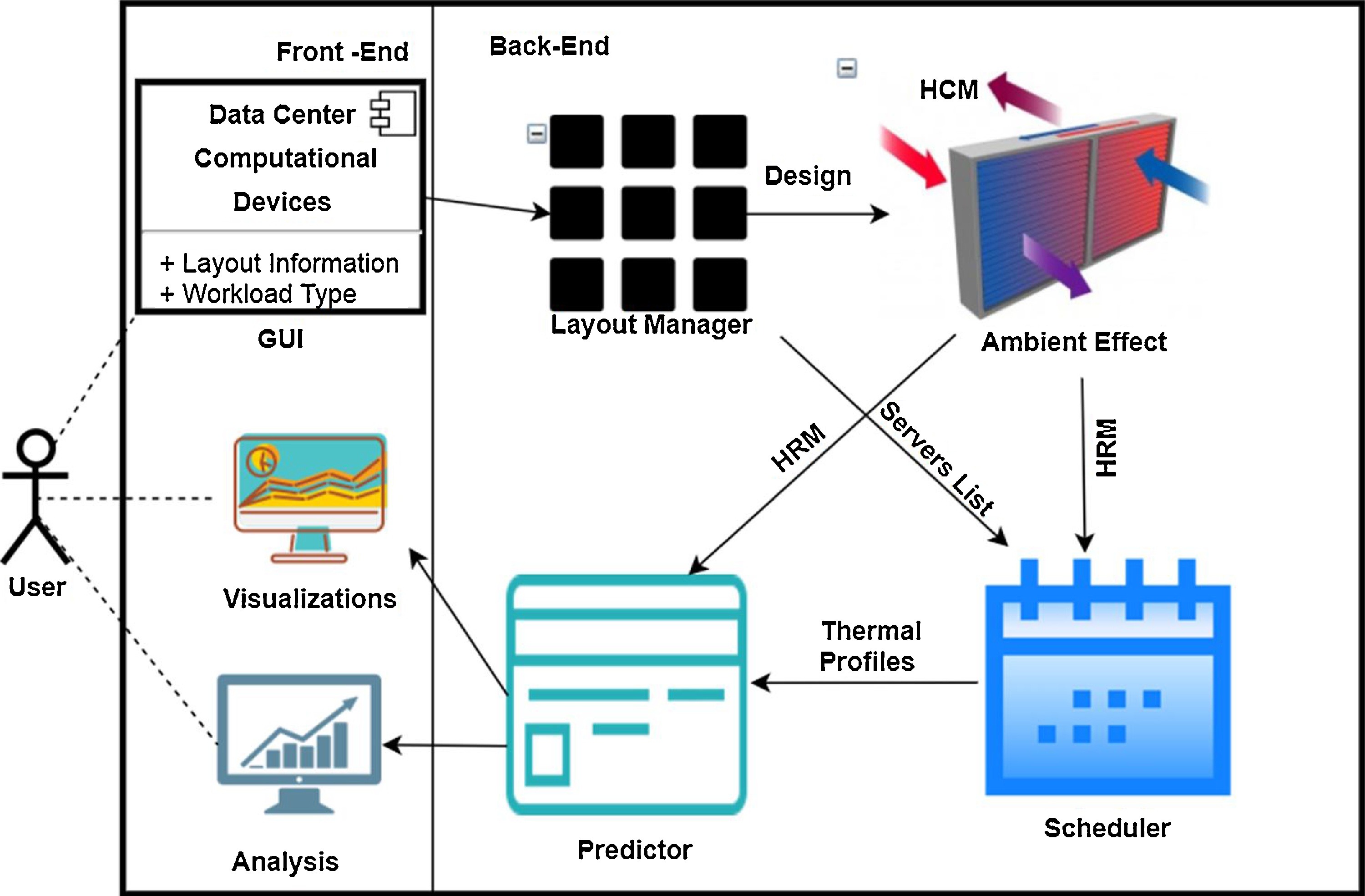
A software simulator was implemented with a graphical user interface to allow users to:
The system supports decision-making for infrastructure planning and operational optimisation.
Thermal modelling · Simulation · Predictive analytics · Data centre engineering · Software development · Visualisation systems
Simulator for modeling, analysis, and visualizations of thermal status in data centers
Sustainable Computing: Informatics and Systems (Elsevier), 2018
🔗 https://www.sciencedirect.com/science/article/pii/S2210537917301907
🎓 MSc Thesis — COMSATS University Islamabad, Pakistan (2017)
A Simulator for Analysis, Modeling and Visualization of Thermal Status in Data Center